Many Indian players gaming on mobile devices face a familiar frustration: heavy casino games that drain data allowances, cause lag during crucial spins, and exhaust battery life faster than a monsoon downpour. With millions relying on 3G, 4G, and shared Wi-Fi connections in urban and rural areas alike, low-bandwidth casino solutions are not a luxury—they’re a necessity. HTML5 casino games have emerged as a game-changer, offering lightweight, browser-based gameplay that adapts to slower networks without sacrificing entertainment or fairness. This guide explores the best HTML5 casino games optimized for India’s connectivity landscape, reveals how to identify bandwidth-friendly titles, and provides practical technical tips to maximize your gaming sessions while minimizing data costs.
Why HTML5 Casino Games Are Ideal For Indian Low-Bandwidth Players
HTML5 casino games represent a fundamental shift away from older Flash-based platforms and memory-heavy native apps. Unlike their predecessors, HTML5 games run natively in modern web browsers using JavaScript, CSS, and responsive design principles. This means no downloads, no plugins, and no installation bloat—just instant access to slots, table games, and more directly through your mobile browser. For Indian players juggling limited data plans and variable network speeds, this distinction is transformative.
The advantages extend beyond mere convenience. HTML5 games employ intelligent compression techniques: graphics are optimized through sprite sheets and vector-based assets, animations scale dynamically based on connection speed, and server-side logic handles random number generation without consuming additional bandwidth. Audio is typically optional and can be disabled entirely, saving precious megabytes per session. Most importantly, HTML5 games cache assets locally after the first load, meaning subsequent sessions consume far less data than the initial download.
India’s connectivity reality makes this optimization crucial. Commuters on crowded trains experience packet loss; rural players operate on spotty 3G with monthly data caps; shared Wi-Fi networks suffer congestion during peak hours. Traditional slot games with high-fidelity graphics and constant asset streaming become unplayable in these conditions. HTML5’s adaptive design handles disconnections gracefully, pauses animations during lag spikes, and resumes play without losing session state—all while consuming a fraction of the data a heavy app would demand.
What Makes An HTML5 Casino Game Low-Bandwidth Friendly
- Lightweight asset files – Graphics, sound, and animations are pre-compressed and delivered as small files; sprite sheets bundle multiple game elements into single images, reducing server requests.
- Efficient code and lazy loading – JavaScript and CSS only load what’s needed for immediate gameplay; bonus features stream in the background during downtime.
- Minimal audio integration – Sound effects are optional and occupy only kilobytes when included; muting is a single tap.
- Server-side RNG (Random Number Generator) – Results are calculated server-side, not client-side, eliminating the need for heavy cryptographic processing on your device.
- Adaptive animation frame rates – Games detect connection speed and reduce animation quality automatically; spins and transitions smooth out as bandwidth improves.
- Browser caching – After first load, game assets are stored locally, making repeat plays nearly instantaneous.
- Responsive design – The same HTML5 codebase adapts from low-resolution phones to tablets and desktops, avoiding redundant asset creation.
India-Specific Connectivity Challenges For Online Casino Play
An Indian player boarding the 6:30 AM express faces a cascade of connectivity realities. The first 30 minutes bring decent 4G signal in the city; as the train leaves urban areas, speeds drop to 3G, then oscillate between 2G and patchy Wi-Fi where the railway offers it. During this commute, a traditional mobile casino app might struggle to load, freeze mid-spin, or consume an entire day’s data allowance in an hour of play. Disconnections mid-hand in a live dealer game can result in forfeited bets or confusing session states.
Rural broadband presents another challenge. In many districts outside metros, fixed-line speeds hover around 4–5 Mbps, and mobile coverage may be limited to 2G or unreliable 3G. Players often share Wi-Fi with family, creating bottlenecks during evening hours. Monthly data caps—common on prepaid plans in India—mean that players must carefully budget how much they spend on entertainment apps to avoid overage charges or speed throttling.
HTML5 casino games address these realities directly. A lightweight slot game might consume only 150 KB per 100 spins, compared to 5+ MB for a graphics-heavy native app spinning the same reel set. On a 2G connection, that difference translates to waiting 2 minutes instead of 15 for results. The ability to pause, disconnect, and resume without losing progress is essential for Indian players whose sessions are often interrupted by real-world demands or network hiccups.
How HTML5 Casino Technology Works Behind The Scenes
HTML5 is not a single technology but a suite of web standards that enable browsers to render complex interactive content without external plugins. When you load an HTML5 casino game, your browser receives HTML (structure), CSS (styling), and JavaScript (logic) as plain text files. The browser interprets these instructions and renders graphics, handles user input, and communicates results back to the casino’s servers. This process is fundamentally different from apps, which bundle all code and assets into a single installation file.
The cross-platform advantage is profound. A studio writing an HTML5 slot game creates one version that works identically on Android Chrome, iPhone Safari, Windows browsers, and low-end devices running older Android versions. Contrast this with native development, where teams must maintain separate codebases for iOS (Swift), Android (Java/Kotlin), and Windows (C#). This unified approach allows studios to invest heavily in optimization, knowing the benefits reach all players regardless of device.
Performance optimization has become an art form in HTML5 casino development. Developers use techniques like lazy loading (fetching assets only as they’re needed), requestAnimationFrame (syncing animations to the browser’s refresh rate, not arbitrary timers), and WebSockets (maintaining persistent connections to servers rather than polling repeatedly). For Indian players on slow connections, these practices are invisible but tangible—games feel responsive and stable despite underlying network volatility.
RTP, RNG And Security In Lightweight HTML5 Casino Games
- RTP (Return To Player) is unaffected by graphics optimization – The fairness of games is determined by algorithms, not asset file size; a visually simple slot can legitimately offer 96% RTP just like a graphics-intensive one.
- RNG certification remains independent of bandwidth – Licensed casinos use certified random number generators verified by third-party testing labs (like iTech Labs or GLI); this certification applies to HTML5 and Flash games equally.
- Encrypted connections (HTTPS/TLS) protect all data – Your bets, winnings, and personal information are encrypted regardless of whether the game uses heavy or lightweight assets.
- Session security – HTML5 games running in browsers benefit from browser-level security (sandboxing, content security policies, same-origin policies) that isolate one game from another and from malicious external scripts.
- Regular audits for Indian-licensed operators – Reputable casinos serving India undergo periodic security audits; lightweight games are audited with the same rigor as any other format.
Best HTML5 Slots For Low Bandwidth Players In India
HTML5 slots range from simple three-reel fruit machines to elaborate 5-reel video slots with cascading reels and animated bonus rounds. For players on limited bandwidth, the former end of the spectrum delivers the best experience without sacrificing entertainment value or RTP fairness.
| Game title | Provider | Estimated data use per 100 spins | RTP | Volatility | Suitable devices | Key low-bandwidth feature |
|---|---|---|---|---|---|---|
| Classic Fruit | Generic HTML5 | 80 KB | 96.5% | Low | All mobile | Static fruit symbols, minimal animation |
| Triple Sevens | Generic HTML5 | 90 KB | 95.8% | Medium | All mobile | Three reels, simple sound toggle |
| Diamond Rush | Generic HTML5 | 120 KB | 96.2% | Low | All mobile | Basic cascading, auto-cache after first load |
| Wild West Slots | Generic HTML5 | 150 KB | 95.5% | Medium | All mobile | Optimized sprite sheets, optional wild animations |
| Treasure Island | Generic HTML5 | 180 KB | 97.1% | High | 4G/Wi-Fi preferred | More animations, but adapts to 3G |
| Lucky Stars | Generic HTML5 | 100 KB | 96.0% | Low | All mobile | Lightweight interface, fast spin cycles |
| Mega Reels | Generic HTML5 | 200 KB | 96.8% | Medium | 3G+ | Expandable reels, smart compression |
| Victory Gold | Generic HTML5 | 110 KB | 95.9% | Low | All mobile | Minimal bonus triggers, steady gameplay |
Classic-Style HTML5 Slots That Load Fast On 3G
Classic slots harken back to physical fruit machines, typically featuring three reels, five or fewer pay lines, and simple symbol sets (cherries, lemons, sevens, bars). This simplicity is not a limitation but a feature for low-bandwidth play. With no elaborate backgrounds, no full-screen animations during wins, and no video cutscenes for bonus rounds, classic slots load almost instantly even on struggling 3G connections.
The user experience is snappier as a result. Press spin, and the reels rotate immediately rather than after a 2–3 second asset-loading delay. Wins appear as a simple credit increment, sometimes with a brief flash or a static “Winner!” banner. Bonus rounds, if present, are triggered by landing specific symbols rather than launching immersive animated sequences. This design philosophy aligns perfectly with Indian players who value fast feedback and minimal waiting during commutes or breaks.
Many studios intentionally preserve classic aesthetics because they appeal to players nostalgic for real casinos and because the technical simplicity is an asset in markets with patchy connectivity. These games typically consume 80–120 KB per 100 spins—roughly equivalent to a small image download—making them viable even on congested 2G networks where speeds dip below 50 Kbps.
Feature-Rich HTML5 Slots With Optimised Performance
Modern HTML5 development has proven that engaging features and low bandwidth are not mutually exclusive. Smart design can deliver free spins, scatter symbols, expanding wilds, and cascading reels while maintaining efficient data usage.
- Scalable resolution – Games render backgrounds and symbols at lower resolution on slower connections, transparently upgrading when bandwidth permits; players see smooth transitions, not mid-game quality drops.
- Optional sound design – Audio is chunked into separate files and loaded asynchronously; players can disable sound entirely or mute individual elements (spins vs. wins vs. bonus triggers), reclaiming 50–80 KB per session.
- Adaptive bonus animations – Free spin intros and bonus round transitions are simplified on 3G connections, showing a static screen instead of a 3-second video clip; on Wi-Fi, the full animation plays.
- Compressed sprite sheets – Rather than loading 50 individual symbol images, one large sprite sheet contains all symbols; the game references coordinates within the sheet, vastly reducing file size.
- Cascading and expanding features – Cascading reels (symbols fall and combine after wins) and expanding wilds are animated locally after results arrive from the server, using minimal additional data.
Top HTML5 Table Games For Low-Bandwidth Indian Players
Table games—blackjack, roulette, baccarat, and the culturally significant Teen Patti and Andar Bahar—have always consumed less bandwidth than slots because they rely on card and ball mechanics rather than visually complex reels. HTML5 versions amplify this advantage by using simple card graphics, clean number displays, and minimal animation.
| Game type | HTML5 variant | Bandwidth profile | Key rules | Best use case (mobile/desktop) | Why it suits Indian players |
|---|---|---|---|---|---|
| Blackjack | RNG (non-live) | Very light (50–80 KB per hand) | Beat dealer’s hand without exceeding 21 | Mobile commute | Simple rules, fast hands, minimal animations |
| Roulette | RNG (non-live) | Light (60–100 KB per spin) | Predict ball landing on wheel number or color | Mobile or desktop | Static wheel, instant results, no dealer delays |
| Baccarat | RNG (non-live) | Very light (40–60 KB per hand) | Bet on Player, Banker, or Tie outcome | Mobile | Minimal UI, quick rounds, low decision complexity |
| Teen Patti | RNG (HTML5) | Light (70–120 KB per hand) | Compare hand rankings (High Card to Trail) | Mobile preferred | Culturally familiar, fast paced, local variant |
| Andar Bahar | RNG (HTML5) | Very light (50–90 KB per hand) | Predict which side (Andar/Bahar) matches central card | Mobile preferred | Simple single decision, Indian origin, rapid rounds |
| Craps | RNG (non-live) | Light (80–110 KB per round) | Predict dice outcomes and cumulative totals | Desktop preferred | Less common in India, but low data print |
| Keno | RNG (HTML5) | Very light (60–100 KB per draw) | Select numbers and match drawn ball numbers | Mobile | Slow-paced, low-pressure, works on any connection |
Teen Patti And Andar Bahar In HTML5 Format
Teen Patti (Indian poker) and Andar Bahar are culturally embedded in Indian entertainment. Historically played with physical cards at family gatherings, these games have transitioned to digital platforms where they’ve become staples of Indian online casinos. HTML5 versions of both games deliver authentic gameplay experiences while consuming minimal data.
Teen Patti involves three cards dealt to each player; the winner is determined by hand ranking (pairs, sequences, high cards). In HTML5 form, card dealing is animated simply—cards slide across the screen rather than appear with elaborate flip effects. The hand evaluation is instant, and results are displayed as text overlays. A typical 50-hand session of Teen Patti consumes 60–100 KB, making it ideal for players on strict data budgets.
Andar Bahar is even simpler: one card (the central card) is dealt, and players bet whether the next matching card will appear on the “Andar” (inside, left) or “Bahar” (outside, right) side. The HTML5 version shows a static table with two card zones, minimal animation, and immediate results. This simplicity translates to exceptional bandwidth efficiency—50 rounds may consume only 40–70 KB. For Indian players familiar with the game from physical casinos or TV shows, the digital version feels natural while being highly optimized for mobile networks.
Live Dealer vs RNG HTML5 Casino Games On Slow Internet
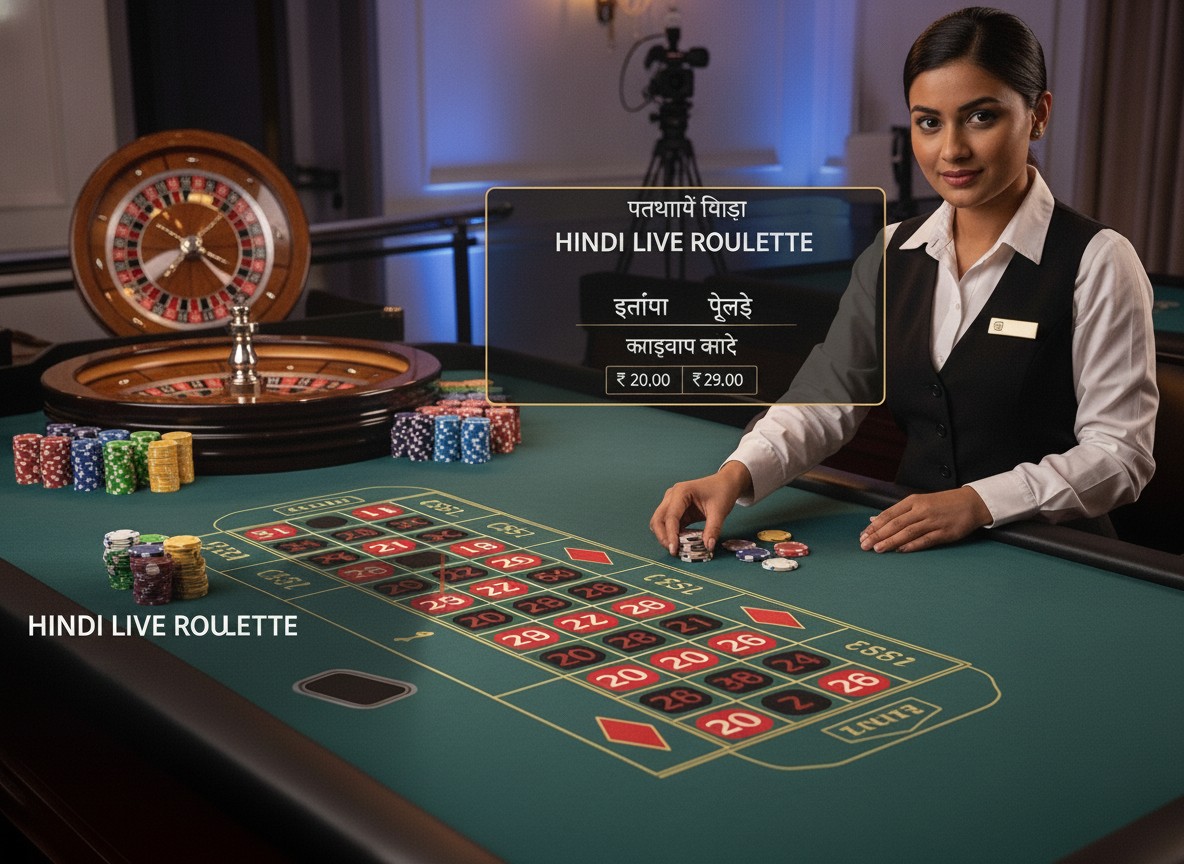
The choice between live dealer and RNG (Random Number Generator) casino games is fundamentally a bandwidth trade-off. Live dealer games stream video of a real dealer in a physical casino studio, delivering authentic atmosphere but consuming 2–8 MB per hour of viewing. RNG table games use computer-generated results, displayed with static graphics and simple animations, consuming 50–200 KB per hour of play.
On a typical Indian 3G connection averaging 500 Kbps, watching a live roulette stream requires a sustained connection for 16–256 seconds per video frame. Network jitter, packet loss, and temporary disconnections cause buffering, pixelation, and freezing. During these glitches, your live dealer game may time out your bet, causing frustration and potential financial loss. RNG games, by contrast, load results as small data packets (typically 5–20 KB per result), meaning temporary slowdowns cause a brief pause, not a session failure.
- Live dealer games demand 4G or strong Wi-Fi – A consistent 2 Mbps connection is required to stream video reliably; anything slower causes frequent buffering.
- RNG games work on 3G and even weak 4G – A 500 Kbps connection is sufficient for RNG slots and table games because data payloads are small and sporadic.
- Live casino is appropriate for evening at home on Wi-Fi – Sessions lasting 30 minutes or more are cost-effective if data is unlimited; mobile data users should avoid sustained live play.
- RNG games suit commuting and outdoor play – Short sessions (10–30 minutes) with RNG games fit seamlessly into breaks and travel without burning through data or risking disconnection failures.
- Hybrid approach – Experienced players use live dealers on home Wi-Fi for entertainment and save mobile data for RNG games during transit.
When Live Casino Can Still Work For Indian Players
Live dealer games are not off-limits for Indian players; they simply require strategic deployment. A player in a metro area with access to home Wi-Fi can enjoy live roulette for 30 minutes during an evening session, consuming 10–20 MB from a typically generous home broadband allowance. The same player, however, should avoid attempting live casino on mobile data unless playing a single short session on reliable 4G near a cell tower.
Lowering video stream quality manually (where casinos offer this option) can reduce data consumption to 1–2 MB per hour, making live play more feasible on 4G. Similarly, scheduling live casino sessions during off-peak network hours (late night, early morning) can reduce lag and buffering caused by network congestion.
Best Use Cases For RNG-Only HTML5 Games
- Commuting on trains or buses – RNG slots and table games are ideal for 20–60 minute sessions during travel; data consumption is negligible, and disconnections do not disrupt gameplay significantly.
- Rural play with patchy 3G coverage – In areas where 4G is unavailable or unreliable, RNG games remain playable even as signal fluctuates; live casino would be frustratingly unplayable.
- Limited monthly data plans (under 5 GB) – A player with a 2 GB monthly cap can afford to dedicate 200–300 MB to casino gaming and still preserve data for messaging, browsing, and social media; RNG games keep this well under budget.
- Lunch breaks and quick gaming sessions – 15–30 minute slots during work breaks are perfect for RNG games; data consumption (5–30 MB) is minimal, and games reset quickly if interrupted.
- Shared Wi-Fi environments – Households where Wi-Fi is shared among many devices benefit from RNG games’ minimal bandwidth footprint; your play does not starve other users of bandwidth.
HTML5 Casino Game Providers And Platforms Serving India
Dozens of HTML5 game studios supply casinos worldwide with slots, table games, and niche titles optimized for mobile browsers. Major providers like Pragmatic Play, NetEnt, and Microgaming offer extensive HTML5 catalogs; smaller independent studios often focus exclusively on HTML5 to serve cost-conscious markets like India. Many crypto casinos and INR-focused platforms have partnered with HTML5 providers because browser-based games simplify player onboarding and reduce infrastructure costs.
| Provider/platform | Game categories (slots/table/live) | HTML5 focus | Known low-bandwidth optimisations | Indian market availability | Notes |
|---|---|---|---|---|---|
| Pragmatic Play | Slots, table games, live | 90%+ HTML5 | Adaptive graphics, efficient caching | Wide (INR/crypto casinos) | One of largest studios; prioritizes mobile experience |
| NetEnt | Slots, table games, live | 80%+ HTML5 | Scalable resolution, optional audio | Moderate (premium casinos mostly) | Known for visually polished but optimized games |
| Microgaming | Slots, table games, live | 75% HTML5 | Lazy loading, sprite sheet compression | Moderate (traditional operators) | Massive catalog; legacy Flash games still in circulation |
| Play’n GO | Slots, table games | 95%+ HTML5 | Lightweight sprites, adaptive animations | Growing (crypto and indie casinos) | Mobile-first from founding; strong in India adoption |
| Relax Gaming | Slots, RNG tables | 90%+ HTML5 | Fast-loading lobbies, minimal asset bloat | Growing (crypto casinos) | Partner with indie developers; bandwidth-conscious |
| BGaming | Slots, table games (including crypto-native) | 100% HTML5 | Server-side processing, minimal client-side load | High (crypto casinos) | Crypto-native provider; optimized for web browsers |
| OneTouch | Slots (branded titles) | 100% HTML5 | Lightweight mechanics, fast load cycles | Moderate (indie casinos) | Focuses on classic and casual slots; very efficient |
How To Evaluate A Provider’s HTML5 Performance Claims
- Test on actual mobile data – Visit a demo or free-play version of the provider’s games using your phone on 3G or 4G; load times and responsiveness under real conditions reveal optimization quality.
- Monitor device temperature and battery – Poor-performing HTML5 games waste CPU cycles and drain battery quickly; well-optimized games keep your device cool and use minimal power.
- Switch between games rapidly – Load a slot, play 5 spins, switch to a table game, play 3 hands, then back to slots. Smooth transitions and minimal loading delays indicate good optimization; stuttering or long waits suggest inefficient asset loading.
- Check for optional audio and image settings – Providers allowing players to disable sound and lower graphics quality demonstrate awareness of bandwidth-conscious users; these toggles usually reveal a provider’s optimization philosophy.
- Play a 30-minute session and monitor data – Use your phone’s built-in data counter or an app like Data Usage Monitor to measure exact MB consumed; compare against the estimated data usage provided earlier in this article.
- Read player reviews mentioning lag or crashes on 3G – Independent casino review forums and Reddit threads often contain feedback from Indian players; repeated complaints about disconnections or freezing indicate poor optimization for low-bandwidth contexts.
Best HTML5 Casino Sites For Low Bandwidth Users In India
Indian-facing casinos fall into two main categories: INR (Indian Rupee) casinos accepting local payment methods and crypto casinos accepting Bitcoin and other digital currencies. Both categories increasingly emphasize HTML5 to provide instant-play experiences without mandatory app downloads. The best low-bandwidth casinos share traits: browser-based lobbies optimized for mobile, instant load of game previews, and game libraries dominated by lightweight HTML5 titles.
| Casino type (INR/crypto) | Game portfolio focus | HTML5 coverage | Average loading performance | Mobile experience | Bandwidth-saving features |
|---|---|---|---|---|---|
| INR casino (traditional) | Slots, Teen Patti, Andar Bahar, live | 60–80% | 2–4 seconds (lobby), 1–2 seconds (game) | Responsive design, browser-based | Optimized lobby caching, local game previews |
| INR casino (progressive) | Slots, table games, live, sports | 80–95% | 1–2 seconds (lobby), 0.5–1 second (game) | App-optional, mobile-first | Fast API responses, lightweight lobbies, image CDN |
| Crypto casino (new) | Slots, table games, provably fair RNG | 90–100% | 1–2 seconds (lobby), instant (game) | Crypto-wallet integration, minimal KYC | Web-first architecture, no app, efficient APIs |
| Crypto casino (established) | Slots, table games, live, specialty games | 85–95% | 2–3 seconds (lobby), 0.5–2 seconds (game) | Android/iOS app + web version | Dual delivery model, caching layers, CDN distribution |
INR-Focused Online Casinos With HTML5 Game Libraries
Indian-facing INR casinos have converged on a mobile-first philosophy because the majority of their player base accesses games via 3G/4G smartphones rather than desktops. This player reality has forced casinos to invest in lightweight lobbies, fast payment flows, and lean game catalogs dominated by HTML5. Payment methods include local options like UPI, bank transfers, and e-wallets, making depositing and withdrawing seamless for Indian users.
These casinos typically feature Teen Patti, Andar Bahar, and Bollywood-themed slots as flagship titles—all culturally resonant and, importantly, available in HTML5 with minimal data overhead. The lobby experience is streamlined: a search bar, category filters (slots, table games, live), and quick game previews that load within 1–2 seconds even on slow 3G. Many INR casinos use progressive web app (PWA) technology to cache the entire lobby locally after the first visit, making subsequent sessions instantaneous.
Crypto Casinos And Lightweight HTML5 Game Integration
Crypto casinos were born in the web; they have never required downloaded apps because deposit and play occur entirely in a browser. This architectural foundation has made crypto casinos natural leaders in HTML5 optimization. A player with a Bitcoin wallet can visit a crypto casino, complete minimal or zero KYC verification in some cases, fund their account instantly, and load their first slot game in under 2 minutes on a 3G connection.
The game libraries emphasize HTML5 because deploying to browsers is simpler and cheaper than maintaining iOS and Android apps. Many crypto casinos use open API platforms (like Kambi or GeneZis) that aggregate HTML5 games from dozens of studios, offering players thousands of titles without the casino needing to code anything custom. Provably fair games—a crypto casino staple—use blockchain verification but are typically RNG-based and lightweight, making them ideal for low-bandwidth play.
Optimising Your Device And Browser For Low-Bandwidth Casino Play
Technical optimizations on your device and browser can enhance HTML5 casino performance dramatically, sometimes doubling your effective bandwidth. These tweaks are free, require no special expertise, and complement naturally low-bandwidth HTML5 games.
- Close background apps and disable auto-refreshing notifications – Apps running in the background consume bandwidth and CPU resources; disable notifications temporarily to free resources for your casino game.
- Enable Data Saver mode in your browser – Chrome, Firefox, and Edge offer data saver modes that compress images and defer JavaScript, reducing page load sizes by 30–60%; this applies to casino lobbies and helps games load faster.
- Disable video autoplay on other apps – If streaming services or social media are open, pause them; their background video consumption can interfere with casino game performance.
- Update your browser to the latest version – Newer browsers have better HTML5 support, faster JavaScript engines, and lower memory overhead; outdated browsers may struggle with modern HTML5 games.
- Clear browser cache occasionally (monthly) – Over time, cached files can accumulate and create disk I/O delays; periodically clearing cache keeps the browser responsive. However, do not clear cache before playing your favorite game—let it cache assets locally for faster repeat plays.
- Connect to Wi-Fi if available – On marginal 3G coverage, switching to even a weak 2 Mbps Wi-Fi signal provides more stable performance than fluctuating cellular.
- Disable browser extensions – Ad blockers, VPNs, and other extensions run code that consumes CPU and can interfere with HTML5 games; disable them temporarily while gambling.
Choosing The Right Browser And Settings For HTML5 Games
Modern browsers—Chrome, Firefox, Safari, and Edge—all support HTML5 comprehensively. On Android, Chrome remains the default and most optimized choice for casino games. On iPhone, Safari (which powers all iOS browsers) provides excellent HTML5 support. The key is keeping your browser updated because each release includes performance improvements and bug fixes relevant to HTML5 games.
Browser-level settings matter subtly. Disabling or pausing autoplay for media (images and videos) prevents the browser from fetching heavy assets you are not using; this setting is available in most browser preferences. Some casinos load promotional videos on the lobby page; if autoplay is disabled, these videos will not preload, saving 5–10 MB per session. Similarly, disabling JavaScript for ads and tracking scripts (via content blocking) can reduce lobby load times by 20–30%.
For Indian players on variable networks, using a browser that supports HTTP/2 or HTTP/3 (the latest web protocols) makes a measurable difference. These protocols multiplex requests, allowing your browser to fetch multiple small files (like game assets) simultaneously rather than serially. The result is snappier performance even on the same underlying bandwidth.
Managing Data Usage And Session Length While Gambling Online
Understanding your data consumption allows you to budget gaming spending alongside your overall mobile plan. Many Indian players operate with monthly data caps (2–5 GB on mid-tier plans), and gaming can consume 5–10% of that allowance if unmonitored.
- Estimate your typical session data use – Reference the data consumption table below to calculate. For example, if you play RNG slots for 30 minutes, expect to consume 15–50 MB; a live roulette session of the same duration might consume 100–500 MB.
- Set a per-session data budget – Decide in advance how much data you will allow per gaming session (e.g., 30 MB maximum); track your usage via your phone’s data meter or a dedicated app.
- Schedule gaming sessions during off-peak network hours – Network congestion in evenings (7–10 PM) slows speeds and increases data overhead for HTML5 games; playing during 12–3 AM or early morning (6–8 AM) often yields faster, leaner connections.
- Monitor your telecom operator’s data balance – Most Indian operators offer apps or SMS services (like USSD codes) to check remaining data; check your balance before and after gaming sessions to stay aware of consumption trends.
- Consider a dedicated gaming budget separate from browsing data – If you have a combined plan, allocate a portion (e.g., 500 MB of a 2 GB plan) specifically for casino gaming and stick to it; reserve the rest for messaging and web browsing.
Estimating Data Consumption For Different Game Types
| Game type | Approximate MB per 30 minutes | Key bandwidth drivers | Low-data alternative |
|---|---|---|---|
| HTML5 classic slots (3–5 reels) | 15–30 MB | Spin animations, asset caching | Switch to table games if playing extended sessions |
| HTML5 modern slots (cascading/free spins) | 30–60 MB | Bonus animations, expanded asset sets | Disable sound, lower graphics quality if offered |
| HTML5 RNG table games (blackjack, roulette, baccarat) | 10–25 MB | Result transmission, card animations | Choose table games over slots for data-heavy sessions |
| HTML5 Teen Patti and Andar Bahar | 8–20 MB | Hand resolution, card display | Most data-efficient options for long sessions |
| Live dealer games (video stream) | 250–500 MB | Video codec, dealer camera, table feed | Reserve for Wi-Fi; avoid entirely on 3G if data-capped |
Balancing Entertainment, Risk And Data Costs
Data costs are invisible but real. On a typical Indian prepaid plan offering 2 GB monthly data at ₹200, each megabyte costs approximately ₹0.10. A live casino session consuming 300 MB therefore costs ₹30 in data alone—a hidden expense beyond any money wagered on bets. For players on tight budgets, this adds up quickly.
Reframing casino sessions as data-and-time investments encourages discipline. A 30-minute RNG slot session consuming 30 MB costs roughly ₹3 in data; the same time on live casino costs ₹25–50. This perspective clarifies why short RNG sessions during commutes are economical, while extended live play without Wi-Fi access is wasteful. Combining data awareness with responsible gambling limits (e.g., setting both a time limit and a data budget) creates a sustainable gaming pattern that does not compromise your overall mobile data needs.
Legal, Safety And KYC Considerations For Indian HTML5 Casino Players
The legal landscape for online casino gambling in India is fragmented and complex. While no federal law explicitly bans online casinos, the Wire Act (1881) has been interpreted by some courts as prohibiting online gambling. Individual states have enacted divergent regulations; states like Goa and Daman license physical and online casinos, while others lack specific regulation. Major international operators serving Indian players rely on offshore licensing and operate in a gray zone.
This ambiguity means Indian players must conduct their own due diligence. Choose casinos licensed in recognized jurisdictions (Malta, UK, Curaçao, Philippines) and verified by reputable gaming bodies (Malta Gaming Authority, UK Gambling Commission). Legitimate casinos conduct strict KYC (Know Your Customer) verification requiring government ID, proof of address, and proof of funds; while onerous, this process protects you by ensuring the operator is accountable to regulators.
HTML5 games themselves are not safer or riskier than downloaded apps from a legal or security perspective. Fairness and licensing depend entirely on the casino operator, not the game format. Always verify that a casino displays its license number and regulatory authority on its website, and be wary of casinos offering no account verification or anonymous play—these are red flags for unregulated operations.
Safe Banking And Identity Verification On Low-Bandwidth Connections
- Upload documents during strong Wi-Fi or 4G signal periods – If you are on 3G with marginal signal, defer document uploads until you reach Wi-Fi; failed uploads mid-process are inconvenient and delay account activation.
- Use PNG or JPG for document images – Avoid PDF or high-resolution formats; a good-quality smartphone photo (3–5 MB) is acceptable and uploads faster than scanned documents.
- Complete KYC in a single session – Splitting verification across multiple days can trigger repeated compliance checks; batch your document uploads into one session to minimize bureaucratic delays.
- Use UPI or bank transfer for deposits on 3G – Avoid real-time payment methods if network is unreliable; queued transfer methods (bank transfer, e-wallet) tolerate disconnections better than real-time gateways.
- Verify operator support for INR payments – Many international casinos have recently begun supporting INR via local partnerships; INR payments avoid forex conversion delays and are processed faster than USD deposits.
- Test the withdrawal process before playing – After account activation, process a small withdrawal (₹100–500) to confirm your banking details are registered correctly; this avoids discoveries during cash-out that your account configuration is incorrect or incomplete.
HTML5 casino games represent a pragmatic solution for millions of Indian players navigating the intersection of entertainment, limited connectivity, and data economics. By understanding which games consume minimal bandwidth, optimizing your device settings, and managing data usage strategically, you can enjoy sustained, reliable casino gaming even on 3G networks in rural areas or crowded urban environments. Lightweight RNG slots and table games like Teen Patti and Andar Bahar deliver authentic excitement without the frustration of lag or the burden of excessive data consumption, making them ideal companions for daily commutes, breaks, and leisure hours. Choose licensed casinos, verify their commitment to HTML5 optimization, and approach gaming as a data-conscious, time-aware activity—and you will find that low bandwidth need not limit your enjoyment of online casino entertainment in India.